Ceylon Pabasara Holidays Ceylon Pabasara Holidays
History • Ancient Empires

Dambulla

Dambulla, The largest and best-preserved cave temple complex on the island.

Matale District, Central Province, Sri Lanka
UNESCO World Heritage Site Spans over 2,200 years of continuous use Easily accessible from any part of Sri Lanka due to its central location in the Cultural Triangle. Can travel there using private transport, public buses, or structured day tours.
Category Culture
Province Central
Elevation 340 m
Time Needed 1.5-2 Hours
Best Time Dry winter season

Unparalleled collection of Buddhist art, rock architecture, and vibrant interior murals.

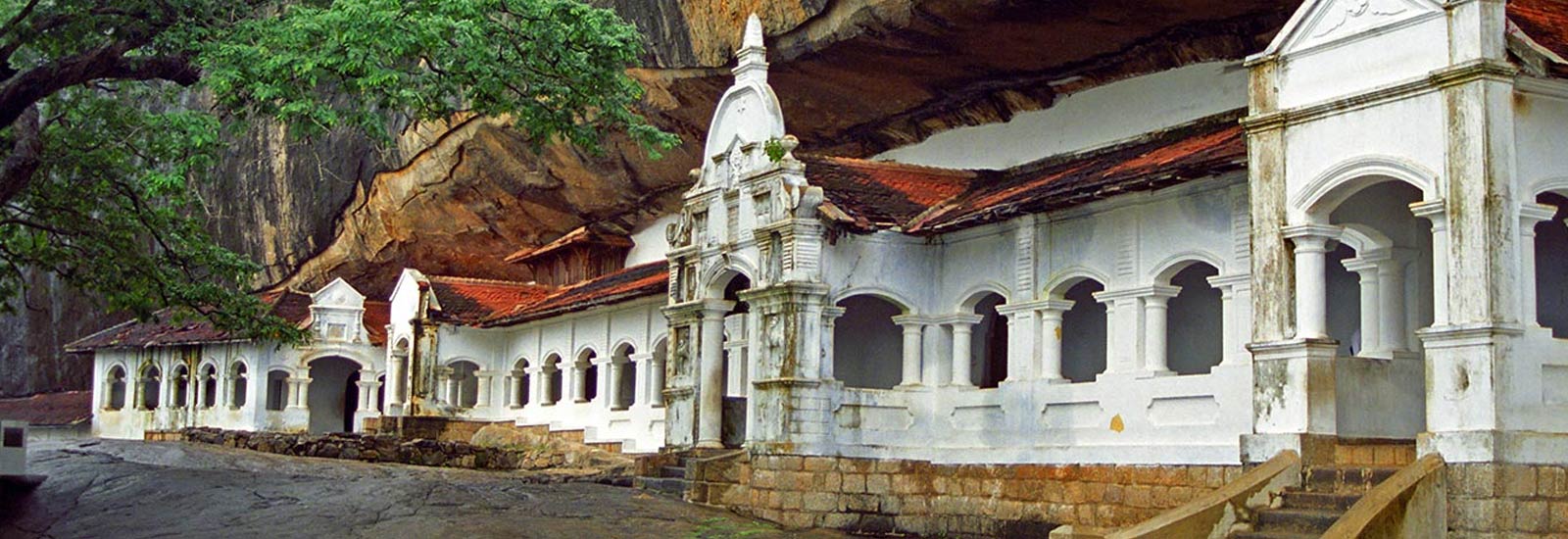
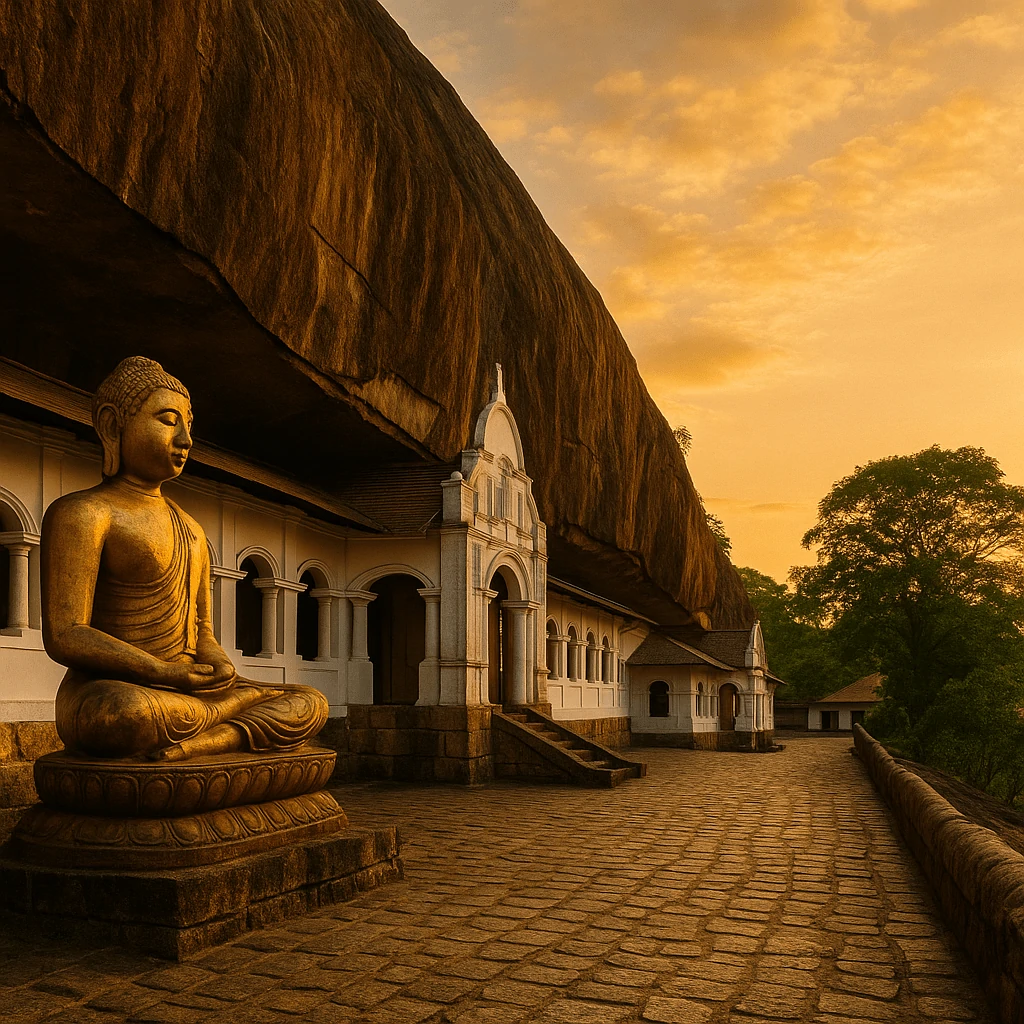
The largest, best-preserved, and most historically significant cave monastery complex in Sri Lanka. Perched atop a massive 160-meter granite rock in the island's central Cultural Triangle, this ancient sanctuary has served as an active sacred pilgrimage and meditation site for over 22 centuries.

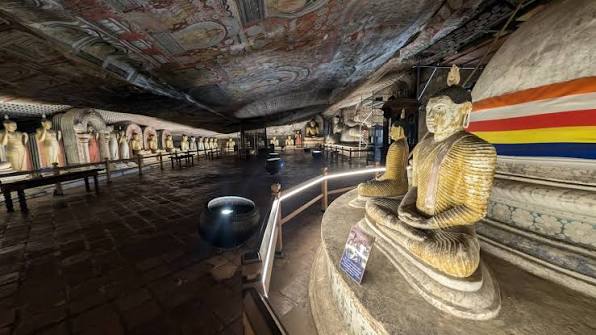
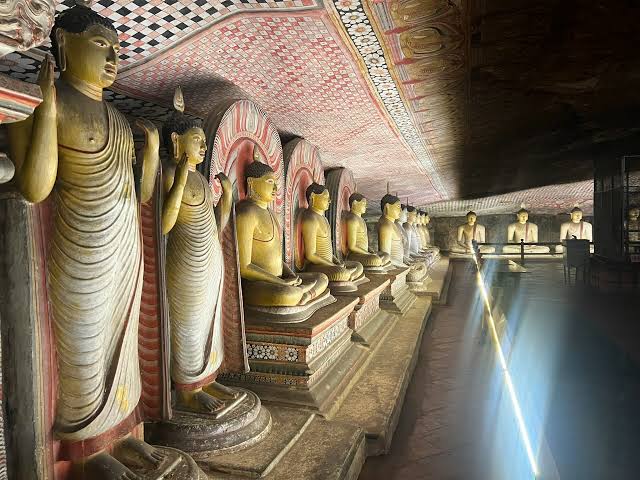
The complex consists of five separate, highly stylized natural caverns carved directly into the underside of a massive rock overhang. Together, they shelter a staggering 157 statues and 2,100 square meters of painted walls and ceilings.

Its historical significance is described through the following phases: its inception (1st century BC), the golden age (12th century), and the revival during the Kandyan era (17th–18th centuries AD).

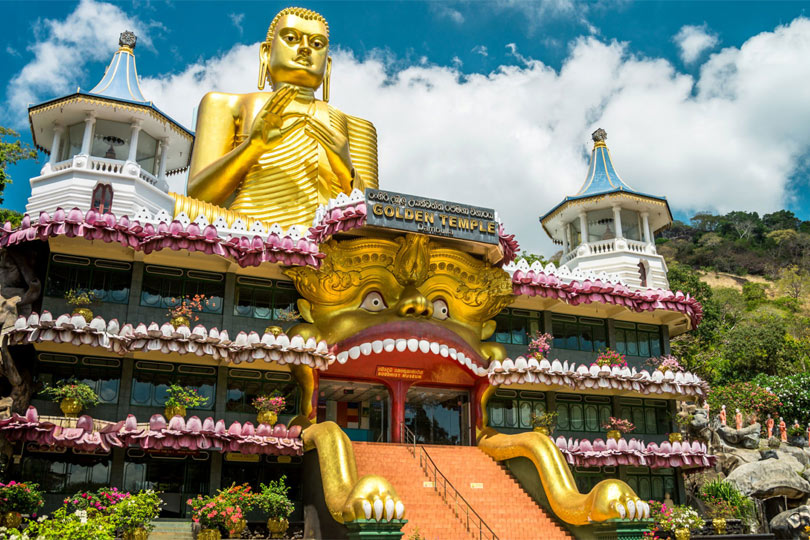
Designated a UNESCO World Heritage Site in 1991, the Rangiri Dambulla Cave Temple is most often referred to as the Dambulla Golden Temple or the Golden Rock Temple of Sri Lanka.

Visitor Information

Opening Hours 7:00 AM to 7:00 PM.
Best Time to Visit Early morning or late afternoon
Difficulty Easy
Duration 1.5-2 Hours
Location Matale District
Heritage Status UNESCO World Heritage
Plan a Visit Or call us at +94 71 808 8152

Key Attractions

The extraordinary features that make the Rangiri Dambulla Cave Temple the largest and best-preserved ancient cave complex in Sri Lanka—a site of global significance.

Maharaja Viharaya

The largest, most spectacular, and historically dominant cave in the entire complex. It houses 60 beautiful statues including a monumental rock-cut standing Buddha.

Maha Alut Viharaya

A massive cave converted into a shrine room by King Kirti Sri Rajasinha of Kandy in the 18th century. It serves as a masterpiece of the Kandyan school of art.

2,100m2 Ceiling Murals

The massive, continuous tapestry of religious and historical paintings blanketing the irregular cave ceilings.

The Golden Temple

The modern visitor entrance complex sitting directly at the bottom of the mountain trail. It features a towering, 30-meter-tall golden Buddha statue.

The Summit Panoramic View

The expansive, breezy stone courtyard terrace outside the caves at the top of the 160-meter-high granite outcrop.

A king's exile bloomed into an immortal sanctuary of faith and color.

The story of the Rangiri Dambulla Cave Temple is an epic saga of a desperate king, an untamed wilderness, and an enduring artistic legacy that has burned brightly in the heart of Sri Lanka for over 2,200 years

This encompasses the following eras: the 'Place of Refuge during Exile' (1st century BC)—where King Valagamba lived in hiding within these secret caves for a prolonged period of 14 years; and the 'Monument of Gratitude' —where King Valagamba, having defeated foreign invaders in 89 BC, transformed the site that had sheltered him into a magnificent royal rock temple, a location that subsequent kings further enhanced with various structures, establishing it as a significant place of pilgrimage.

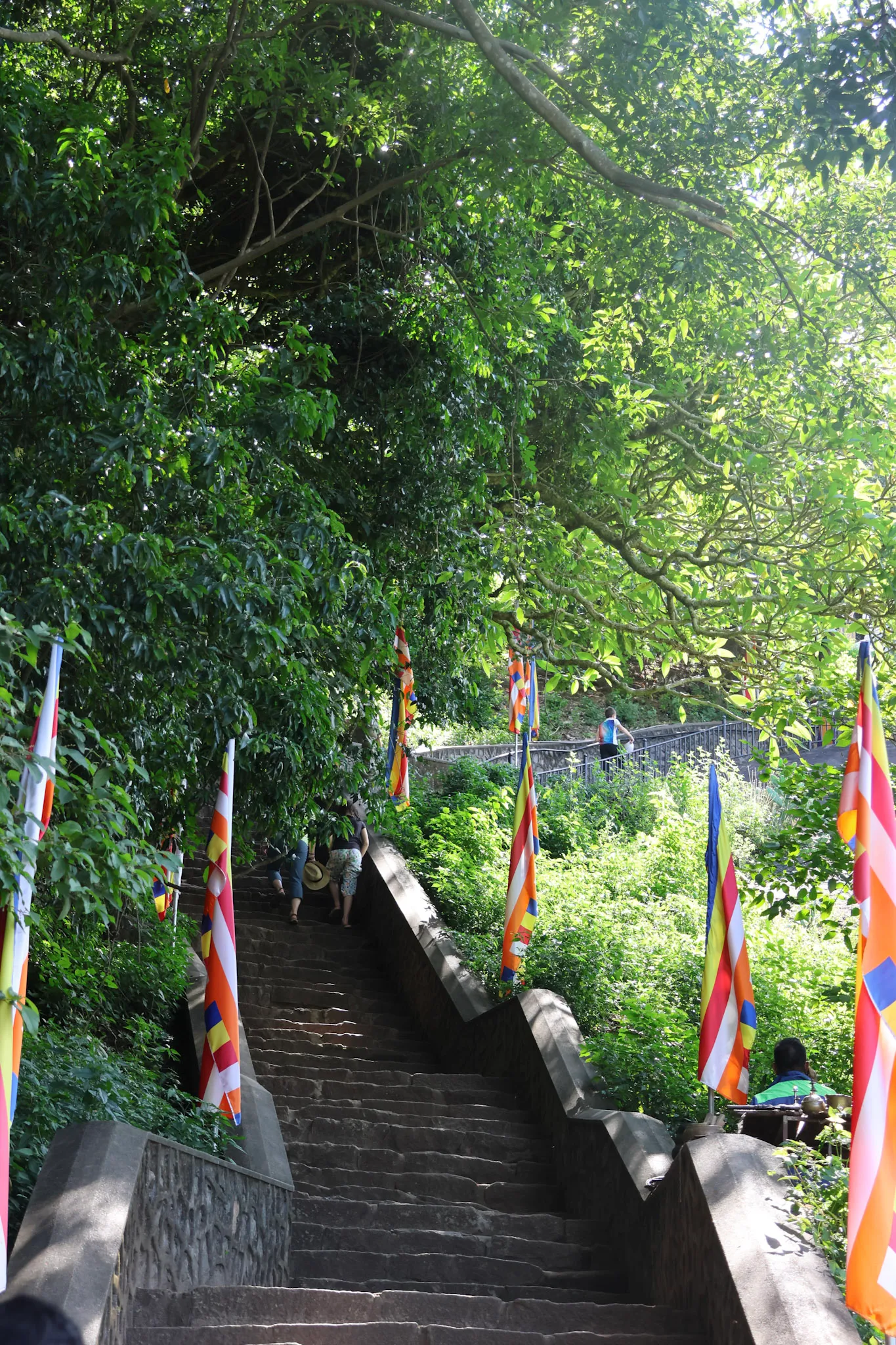
Today, as you climb the 350 ancient stone steps, past the playful monkeys and the scent of crushed frangipani blossoms, you walk the exact path trodden by exiled kings, ancient monks, and millions of barefoot pilgrims across two millennia. The air inside the quiet, cool caverns still carries the scent of burning oil lamps and incense—a continuous string of devotion that has never been broken.
Practical Information

Everything you need to know before visiting Rangiri Dambulla Cave Temple.

How to Get There

Dambulla is approximately 158 km from Colombo (3.5 hours by car). It can also be reached from Kandy (2 hours). Private transfers are recommended for the most comfortable journey.

Best Time to Visit

Early Morning (7:30 AM – 9:00 AM): The air is cool, the stone steps are comfortable to walk on barefoot. Late Afternoon (3:30 PM – 5:00 PM): The sun is lower, casting a golden glow over the surrounding plains. It is much cooler, and you can catch a beautiful sunset from the rock summit.Avoid Midday (11:00 AM – 3:00 PM): The tropical sun makes the climb exhausting.

What to Bring

Wear comfortable walking shoes with good grip. Bring at least 2 litres of water, sunscreen, a hat, and a fully charged camera. Light, breathable clothing is essential due to the tropical heat and humidity.

Tickets & Entrance

Foreign adult admission is approximately USD 10. Tickets are sold at the base of the hill near the large Golden Buddha statue.

Safety Tips

Beware of the Wild Monkeys. Protect Your Feet (The Hot Floor Hazard).Carefully climb 350 stone steps along a slippery surface. Stay hydrated throughout.

Nearby Attractions

Combine your visit with Sigiriya Lion Rock (30 min), Pidurangala Rock (40 min) , Minneriya National Park Safari (40 min) and Ibbankatuwa Megalithic Tombs (10 min) for a complete Cultural Triangle experience.

Tours That Include Dambulla

Explore our curated tours that feature Dambulla as a highlight destination.

Ready to Explore
Dambulla?

Let us plan the perfect visit to the Lion Rock. From private guided climbs to combined Cultural Triangle tours, we'll craft every detail.