Ceylon Pabasara Holidays Ceylon Pabasara Holidays
Udawalawa • Wild Empires

Udawalawa

Formally established on June 30, 1972, to shelter wild animals displaced by the construction of the Udawalawe Reservoir.

Ratnapura and Monaragala Districts, Sabaragamuwa and Uva Provinces, Sri Lanka.
Delivers exceptional ecological, experiential, and conservation value, functioning as an unparalleled elephant sanctuary while offering tourists highly dependable wildlife viewings year-round. Sri Lanka's first major post-independence eco-sanctuary explicitly engineered to mitigate the ecological costs of human development. From Colombo/From Ella/From the South Coast (Mirissa/Matara), By Private Car or Taxi (Recommended), By Public Bus (Budget-Friendly), By Train (Indirect).
Category Wildlife
Province Sabaragamuwa and Uva
Elevation 100 m
Time Needed 3 to 4 hours for a standard safari
Best Time Dry season from June to September

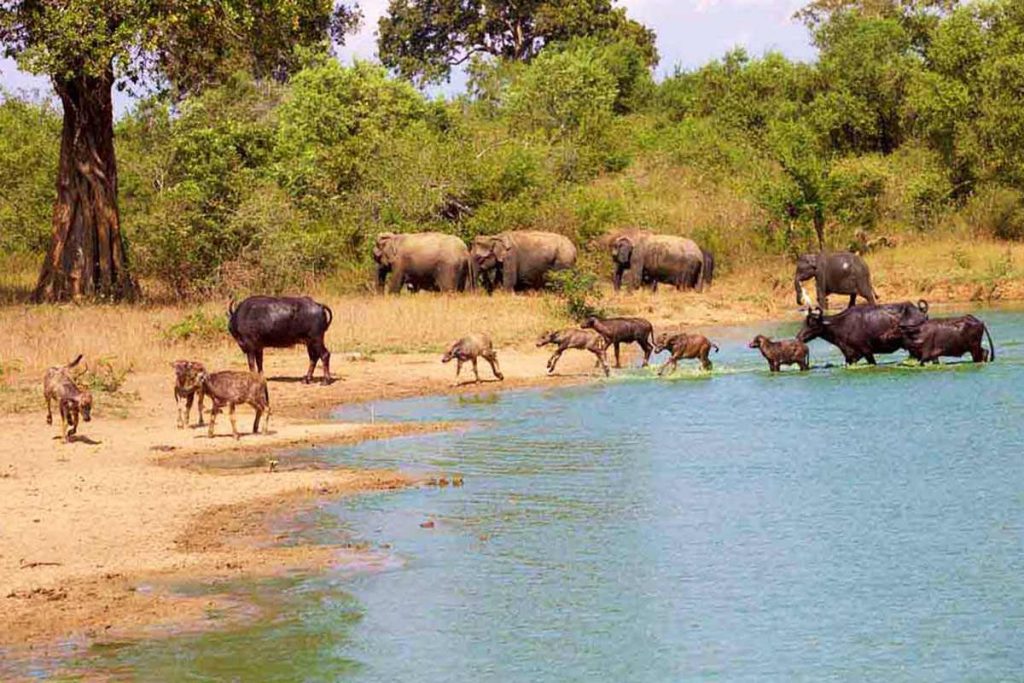
Sri Lanka’s premier wildlife sanctuary for observing wild Asian elephants in their natural habitat.

Unlike the dense jungles found in other parts of Sri Lanka, Udawalawe consists mainly of open grasslands, old teak plantations, and thorny scrub forest.

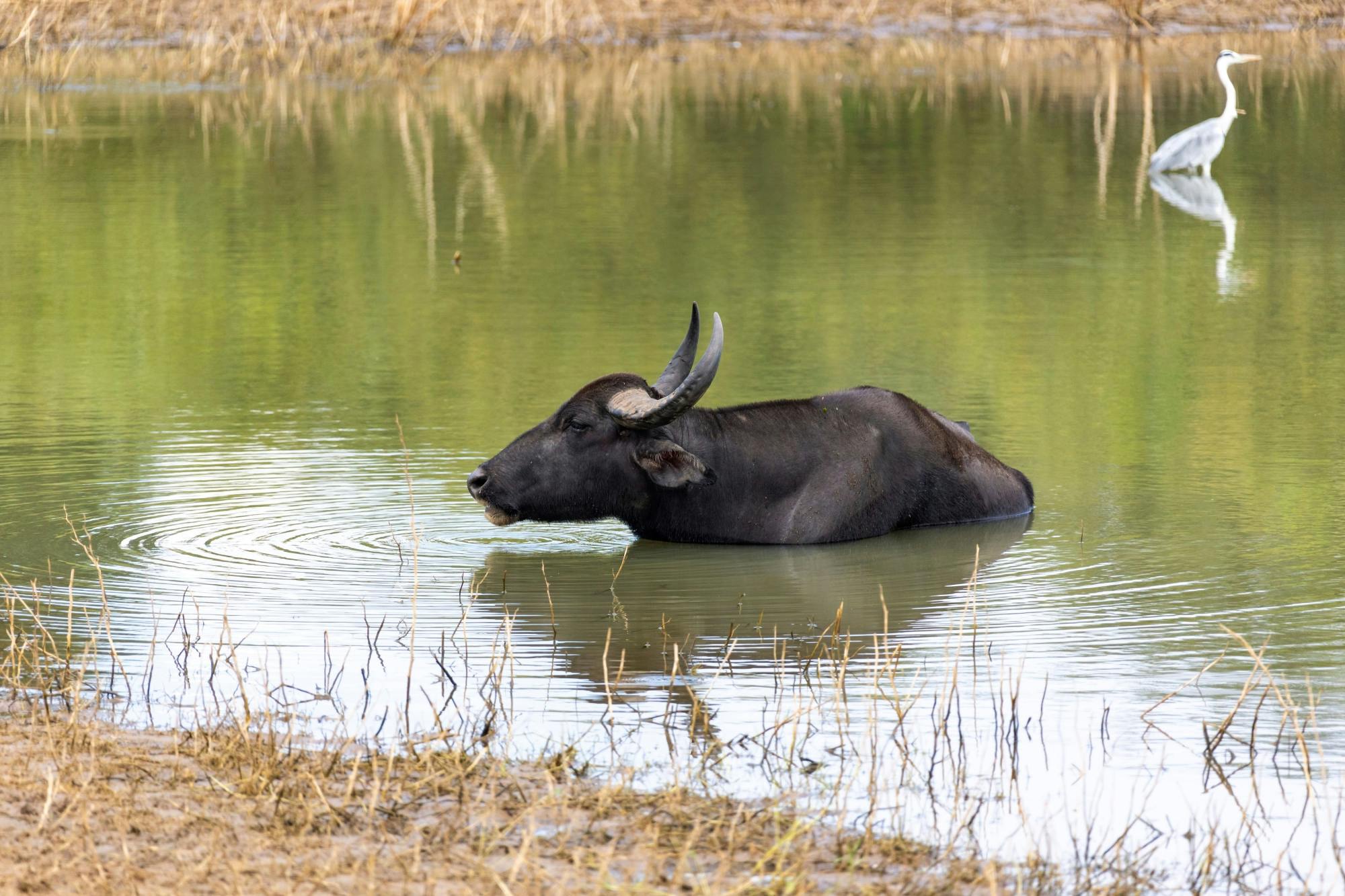
The central Udawalawe Reservoir serves as the lifeblood of the park, providing a permanent water source that sustains thousands of animals year-round.

Located in the southern dry zone, the park is consistently warm and tropical.

The landscape transforms from a dusty, golden savanna in the dry season (June–September) to a lush, vibrant green paradise during the monsoons (October–January).

Visitor Information

Opening Hours 6:00 AM - 6:00 PM
Best Time to Visit Early morning (6:00 AM – 10:00 AM) and the late afternoon (2:30 PM – 6:00 PM).
Difficulty Easy
Duration 3 to 4 hours
Location Ratnapura and Monaragala Districts
Important Status Legally designated and protected at the national level as an IUCN Category II National Park.
Plan a Visit Or call us at +94 71 808 8152

Key Attractions

The characteristics that contributed to Udawalawe National Park becoming a significant ecological and economic resource, as well as a globally renowned reserve.

Udawalawe Reservoir

A massive, scenic man-made lake created by damming the Walawe River that sits at the center of the park landscape. Safari jeeps drive along its edge to photograph elephants.

The Open Grasslands

Unlike the thick scrub jungles of Yala, Udawalawe features vast, open terrain covered in tall Guinea grass and scrubland.

Walawe River and Riverine Forests

A lush, shaded strip of dense canopy forest that grows exclusively along the path of the Walawe River.This cooler, shaded area is a zone for tracking more elusive species.

Mau Ara Reservoir

A smaller, more secluded reservoir located in the eastern sector of the national park boundaries.It is an exceptional, peaceful spot for birdwatching.

Raptor Watchpoints

The open plains and dead trees surrounding the reservoirs create the ultimate hunting ground for majestic birds of prey.It is a world-class attraction for bird enthusiasts.

The Living Heart of the Wild Where Hundreds of Elephants Gather at Dawn.

Established in 1972, this 30,821-hectare reserve acts as a critical catchment area for the massive Udawalawe Reservoir, which serves as the park's scenic and ecological heart.

The park features a distinct topography of dry-zone grasslands, thorn scrub, and abandoned teak plantations. Towering over the western sector is Ulgala Peak, while the northern horizon is framed by the dramatic Kalthota Escarpment.

Exploration is done exclusively via rugged, open-top 4x4 safari jeeps driven by local trackers who know how to navigate the dirt trails. Safaris run daily between 6:00 AM and 6:00 PM, with the morning and late afternoon hours offering the coolest temperatures and the highest animal activity levels.
Practical Information

Everything you need to know before visiting Udawalawe National Park.

How to Get There

By Private Vehicle, Taxi, or Tuk-Tuk (Fastest & Easiest)- From Colombo: Takes 3.5 to 4 hours, From Ella: Takes about 2 hours, From the South Coast (Mirissa/Matara/Hiriketiya): Takes roughly 1.5 to 2 hours, From Kandy/Peradeniya: Takes 4 to 4.5 hours. By Public Bus (Budget-Friendly) and By Train (Indirect) also available.

Best Time to Visit

Morning Safari: 6:00 AM – 10:00 AM (Best for Active Wildlife), Afternoon Safari: 2:30 PM – 6:00 PM (Best for Elephant Herds).

What to Bring

Earth-Toned Clothing, A Light Scarf or Sarong, A Light Jacket, Sunglasses and a Secure Hat, Closed-Toe Shoes, High-SPF Sunscreen, Insect Repellent, Wet Wipes or Face Tissues, Motion Sickness Medication (optional), Camera with a Telephoto Lens, Binoculars, Ample Bottled Water and Packed Meals & Snacks.

Tickets & Entrance

Must be purchased at the official Department of Wildlife Conservation ticket office, which is located directly at the main park gate. Government Entry Fees Breakdown (All-Inclusive Estimates)-Foreign Adults: $35 USD. Hired Jeep Costs (Paid Separately)- $40 USD.

Safety Tips

Vehicle & Wildlife Interaction Safety (Stay Inside the Jeep, Maintain a Safe Distance, Keep Noise Levels Down, Turn Off Flash Photography), Health & Environmental Safety (Wear a Seatbelt or Hold On, Protect Against the Sun, Beware of Dehydration and Dust).

Nearby Attractions

Combine your visit with Elephant Transit Home (orphaned) (10 min), Sankapala Raja Maha Viharaya (30 min), Maduwanwela Walawwa (1 hour) Chandrika Lake (40 min) and Diyaluma Falls (1.45 hours) for a complete experience.

Tours That Include Udawalawa National Park

Explore our curated tours that feature Udawalawa National Park as a highlight destination.

Ready to Explore
Udawalawa National Park?

Let us plan the perfect visit to the Udawalawa National Park. From private guided climbs to combined Cultural Triangle tours, we'll craft every detail.